Refresh Your Kitchen Without a Full Remodel: Cabinet Painting
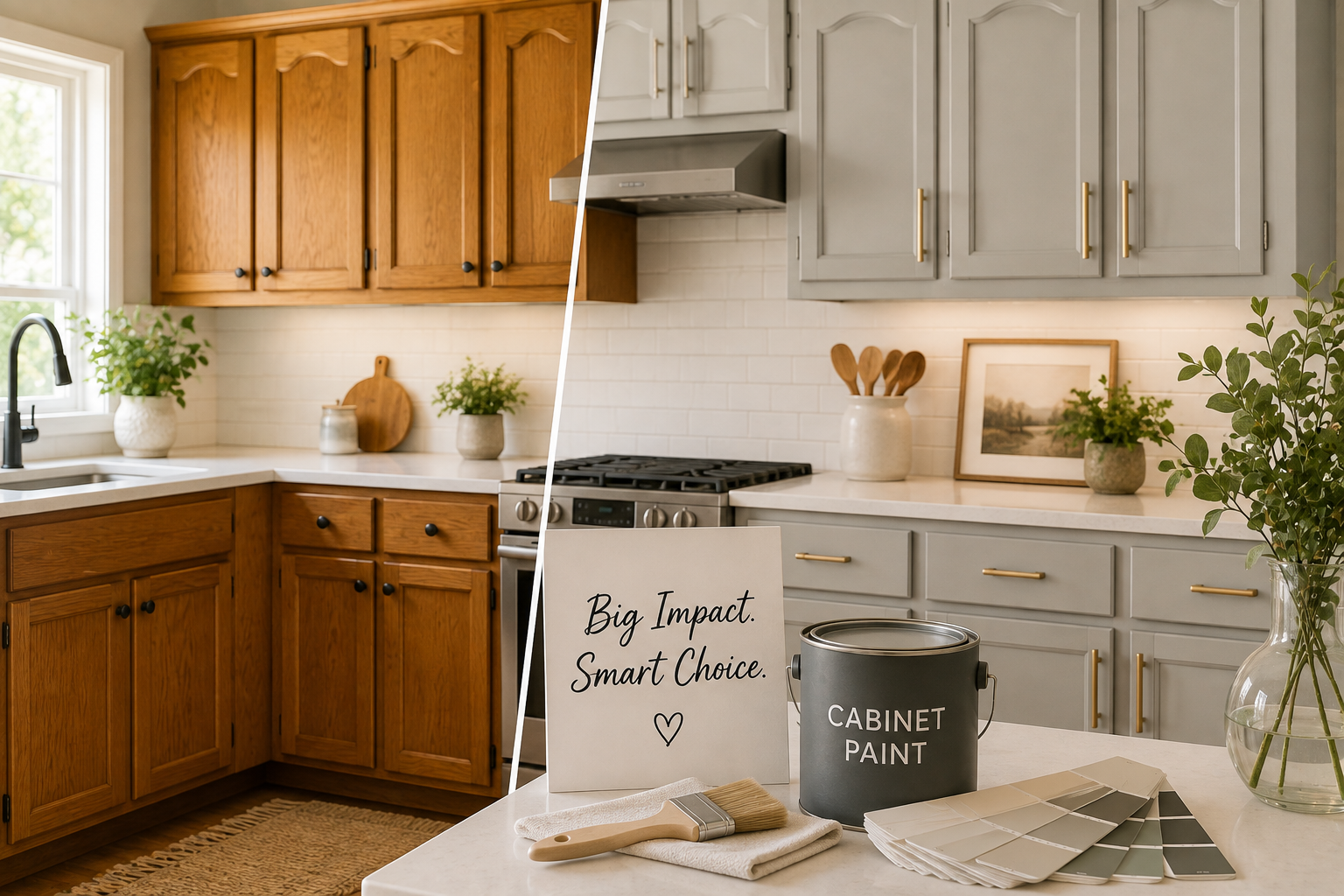
Dreaming of a fresh new kitchen but not the enormous cost of a full remodel? There's a solution that many homeowners overlook: painting your cabinets. It's one of the most dramatic, cost-effective ways to transform your kitchen. New paint on your cabinets can make the whole space feel brand new, without the huge expense of replacing everything.
Here in the Puyallup area, cabinet painting is a smart way to refresh your kitchen. Here's what to know.
Why cabinets make such a difference
Think about your kitchen. What do you see? A lot of cabinets. They take up much of the visual space, so they have a huge impact on how your kitchen looks and feels. When cabinets look dated, worn, or simply not to your taste, they can drag down the whole room.
That's exactly why painting them is so powerful. By refreshing your cabinets, you transform the most visually dominant part of your kitchen. The result can be a stunning change that makes the whole space feel updated and new, at a fraction of the cost of replacing them.
A budget-friendly transformation
Replacing kitchen cabinets is expensive, one of the biggest costs in a kitchen remodel. Painting your existing cabinets, on the other hand, is far more affordable. You get a dramatic new look without the huge price tag of new cabinets.
For homeowners who want to update their kitchen without breaking the bank, this is a fantastic option. The savings compared to a full remodel are significant, while the visual impact can be just as striking. It's a smart way to get a big change for a smaller investment.
Preparation is everything
Here's the most important thing to understand about cabinet painting: the preparation makes all the difference. Cabinets get a lot of use and are exposed to grease, moisture, and daily wear. For paint to look great and last, the surfaces must be properly prepared.
This means thorough cleaning to remove grease and grime, sanding to help the paint adhere, and often priming. Skipping or rushing these steps leads to paint that peels, chips, or doesn't look right. Proper prep is unglamorous but absolutely essential for a beautiful, lasting result.
The right products matter
Cabinets aren't like walls. They're touched constantly, exposed to moisture and grease, and need to stand up to heavy use. That means using the right paint and products for cabinets is important. The right products create a durable, smooth finish that holds up over time.
Using the wrong paint can lead to a finish that doesn't wear well or look right. This is one of many reasons professional cabinet painting produces such better results, professionals know which products to use and how to apply them for a finish that lasts.
Getting a smooth, professional finish
One of the biggest differences between a DIY cabinet job and a professional one is the finish. Cabinets painted by professionals often have a smooth, factory-like finish that looks beautiful. Achieving this takes skill, the right techniques, and the right equipment.
A smooth, even finish makes cabinets look high-end and professionally done. Brush marks, drips, and uneven coverage, common in DIY jobs, can make cabinets look worse instead of better. For a result you'll love, the quality of the finish really matters.
Choosing your colors
Part of the fun of cabinet painting is choosing a new color. This is your chance to update your kitchen's whole look. Consider:
Classic neutrals for a timeless, versatile look.
Bold colors to make a statement.
Two-tone looks, with different colors for upper and lower cabinets.
What works with your kitchen, including your counters, floors, and style.
Take your time with this choice, since you'll be enjoying it every day. Testing colors in your own kitchen's lighting helps you pick the perfect shade.
Why hire a professional
Cabinet painting is a project where professional work really pays off. The preparation, the right products, and the skilled finish all make a huge difference in the result. Professionals have the expertise and equipment to transform your cabinets beautifully.
Trying to do it yourself can lead to disappointing results and wasted time and money. For a transformation you'll be thrilled with, professional cabinet painting is well worth it. The Washington State Department of Labor and Industries offers tips for hiring a contractor.
Olson Painting serves homeowners in the Puyallup area with residential painting, including cabinet painting. Whether you want to refresh your kitchen or tackle another painting project, their team can help you get beautiful, lasting results.
A fresh kitchen awaits
You don't need a full, expensive remodel to fall in love with your kitchen again. Cabinet painting offers a dramatic, budget-friendly transformation that can make your whole kitchen feel brand new.
So if your kitchen could use a refresh, consider painting those cabinets. With proper preparation, the right products, and a skilled finish, you can transform your kitchen and enjoy a beautiful new space for years to come.
Get in touch
Olson Painting — Janssen Olson
Website: https://www.facebook.com/people/Olson-Commercial-and-Residential-Painting/100085874965885/
Email: janssen.olson@gmail.com
Helpful links
Tips for hiring a contractor (WA State Dept. of Labor & Industries): https://lni.wa.gov/
Olson Painting: https://www.facebook.com/people/Olson-Commercial-and-Residential-Painting/100085874965885/
Aug 25, 2026
Read More