History of Do the Puyallup Fair Jingle and Slogan

Puyallup · Community Photo
Explore the history of do the puyallup fair jingle and slogan, crafted in 1976 by Cole & Weber and songwriter Saxon Rawlings, which grew into an iconic late-summer soundtrack across the Pacific Northwest.
Every August and September across western Washington, living rooms and car stereos filled with an unmistakable country-twang melody. Crisp banjo picking combined with bright vocal harmonies to deliver an irresistible broadcast invitation, signaling to families across the region that carnival season had returned to the valley.
Written by Saxon Rawlings and produced through the advertising agency Cole & Weber, the commercial theme debuted in 1976. What began as a seasonal media push quickly turned into an enduring broadcast fixture across television and radio sets throughout late summer.
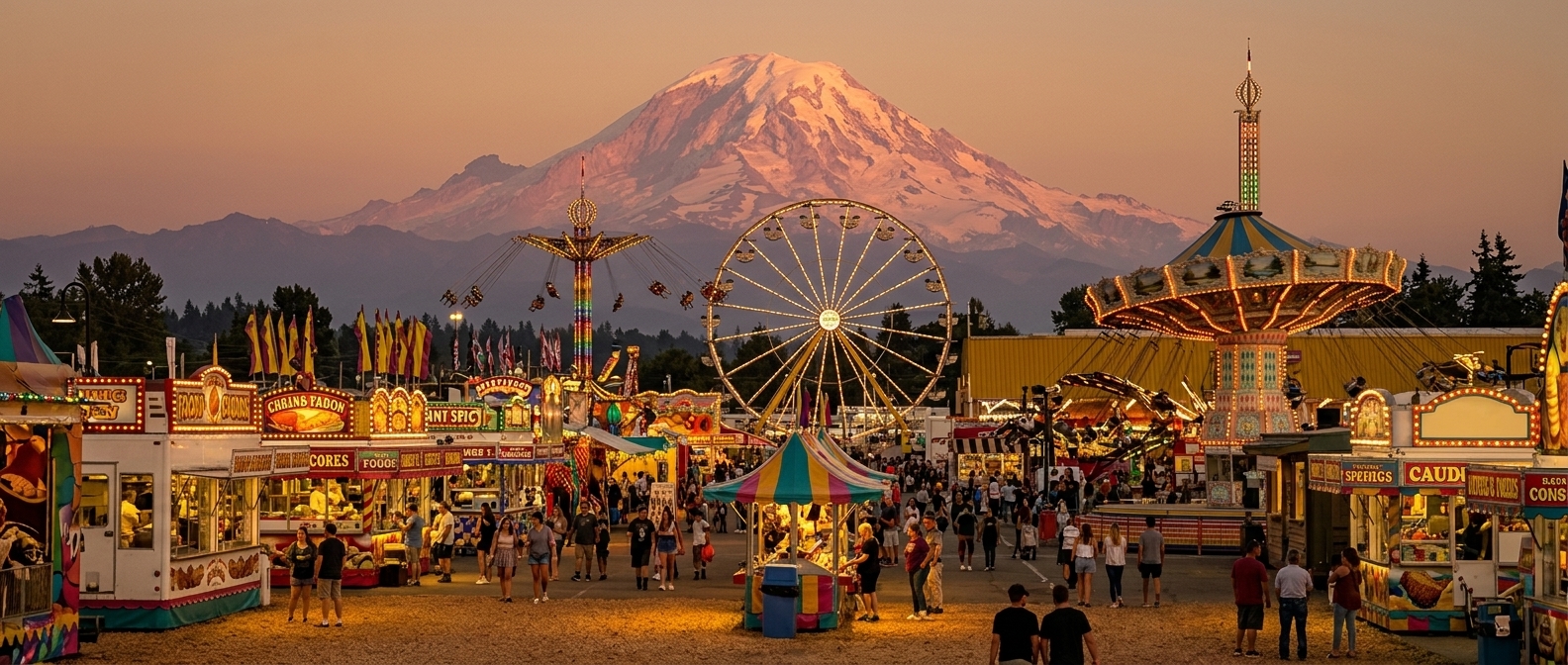
From the shadow of Mount Rainier to points roughly 35 miles north in Seattle and 10 miles west in Tacoma, households recognized the catchy refrain as the definitive musical herald of the season. Even as the event transitioned across eras—tracing its path from the Puyallup Valley Fair founded in October 1900, to the Western Washington Fair named in 1913, and finally to the official Washington State Fair in 2013—the spirited melody remained a cherished rite of passage each autumn.
Origin of "Do the Puyallup" in 1976
The Creative Spark of 1976
The definitiveorigin of do the puyallupdates back to 1976, when event organizers collaborated with the Pacific Northwest advertising agency Cole & Weber to revitalize interest across Puget Sound. Operating under its long-standing moniker adopted in 1913, the annual gathering sought an engaging promotional approach to reach growing communities in Fife, Tacoma, Seattle, and the surrounding agricultural valley. Songwriter Saxon Rawlings crafted an upbeat, country-twang melody that transformed an annual rural outing into a widely recognized regional celebration.
Rather than relying on straightforward scheduling announcements, thewestern washington fair advertising campaignintroduced a catchy call-to-action that treated the event not merely as a location, but as an active dance step and shared tradition. Radio and television broadcasts quickly carried the tune into households throughout Pierce County and beyond, securing its reputation as an unforgettable late-summer staple.
Broadcast Saturation and Regional Reach
Throughout the late 1970s and into subsequent decades, the1976 puyallup fair jingleachieved massive airplay across Western Washington broadcast stations. The production paired down-home instrumentation with rhythmic phrasing that resonated across diverse audiences:
Creative direction:Developed by agency Cole & Weber alongside creator Saxon Rawlings to generate an approachable, country-flavored earworm.
Broadcast saturation:Broadcast across television and radio networks to draw families southward from Seattle and eastward from Tacoma.
Identity transformation:Promoted the popular "Puyallup Fair" moniker across regional media decades before the organization formally transitioned to become the Washington State Fair in 2013.
By blending rural charm with rhythmic pacing, the promotional push succeeded in uniting families across Puget Sound, firmly establishing the slogan in the Pacific Northwest's shared media heritage.
Era | Campaign Development | Media Channels and Key Features |
|---|---|---|
1976 | Launch of the western washington fair advertising campaign created by advertising agency Cole & Weber and songwriter Saxon Rawlings. | Debut of the 1976 puyallup fair jingle across television and radio commercials featuring a country-twang melody. |
1980s–1990s | Continued broadcast saturation embedding the slogan into local culture alongside regional transit additions such as SR-512. | Television and radio spots broadcasting the call-to-action across the Puget Sound region, Seattle, Tacoma, and Fife. |
2025 | Retrospective revival commemorating the 125th anniversary of the fair, originally founded in 1900. | Re-recorded edition of the tune featuring authentic 1970s instrumentation, including vocal harmonies, acoustic elements, and a vintage Rhodes keyboard. |
Catchy Rhythm and Fair Jingle Lyrics
When ad copywriter Saxon Rawlings composed the promotional song for Cole & Weber in 1976, he paired Denny Hinton's central slogan with an infectious, laid-back cadence. Rather than delivering a conventional sales pitch, the track relied on clever rhyming couplets that perfectly matched the relaxed, joyful anticipation of late summer in Puyallup, Washington.
Playful Wordplay and Memorable Rhythm
The musical delivery balances rustic country charm with sharp rhythmic pacing. Central to its lasting appeal is the beloved couplet that playfully connects physical movement with lighthearted medical advice:
"You can do it real slow so your heart don't palpitate, just don't be late, do the Puyallup!"
This witty turn of phrase captured the warm, unhurried atmosphere of an annual gathering while keeping the central call to action unmistakable. Looking closer at the craftsmanship across the do the puyallup lyrics reveals several key stylistic elements:
Equestrian imagery:Lines encouraging listeners to go at a trot or a gallop established a bouncy, rhythmic momentum while subtly referencing farm traditions.
Regional touches:The verses grounded the festive energy with lighthearted nods to nearby areas like Tacoma, Seattle, and Fife.
Rural farm motifs:Playful imagery featuring a duck and chicken kicking up hay tied the musical hook straight back to livestock barns and agricultural displays.
By blending gentle humor with an irresistible hook, the fair jingle lyrics transformed a regional event into an unmissable seasonal ritual, reminding listeners that however they traveled, they simply could not miss opening day.
The Classic Catchphrase
"You can do it at a trot, you can do it at a gallop, you can do it real slow so your heart won't palpitate. Just don't be late. Do the Puyallup."
Written by Saxon Rawlings in 1976 around the promotional hook conceived by Denny Hinton, this rhythmic line defined the spirit of the seasonal celebration in Puyallup, Washington. The memorable rhyme etched the fair jingle lyrics into the minds of multiple generations of fairgoers.
Official Names, Slogans, and the 2013 Rebrand
Official Titles Versus Vernacular Tradition
A widespread misconception across the Pacific Northwest is that the annual gathering in Puyallup, Washington, was legally titled the "Puyallup Fair" throughout its history. In truth, the event originated in October 1900 as the Valley Fair before formally taking the name Western Washington Fair Association in 1913. For nearly a century, the gathering operated under the title Western Washington Fair, even as generations of attendees informally called it by the city's name.
That colloquial identity became indelibly fixed in 1976 when the advertising agency Cole & Weber launched the "Do the Puyallup" campaign. The catchy jingle linked the fairgrounds to the city in the minds of millions, overshadowing the official corporate title. Even after the venue adopted "The Puyallup Fair and Events Center" in 2006, the slogan functioned not merely as a marketing phrase, but as the event's cultural signature.
The Transition to a Statewide Identity
In September 2012, fair spokeswoman Karen LaFlamme announced a significant shift: starting with the 2013 season, the event would formally become the Washington State Fair. Leadership enacted thepuyallup fair name changeto better reflect visitors and exhibitors traveling from across the entire state, while gaining stronger standing when booking major national entertainment acts.
Thewashington state fair rebrand 2013reshaped the event's public branding across several key milestones:
Broadened Scope:Transitioning from a regional moniker to the Washington State Fair emphasized an attraction serving attendees statewide rather than solely western counties.
Slogan Retention:Organizers intentionally preserved the classic tagline, ensuring that the beloved slogan remained a staple of seasonal promotions.
Preserved Heritage:The enduringdo the puyallup legacyensured that longtime fairgoers maintained their emotional connection to the event despite the updated corporate nomenclature.
Today, the 160-acre fairgrounds host both the signature 21-day autumn run and an April Spring Fair. While signage across the grounds reflects the state fair status, the historic promotional catchphrase remains an unbroken link connecting modern crowds to decades of tradition.
Historical Roots Overview (1900–1913)
Founding:The event began as the “Valley Fair” (also called the Puyallup Valley Fair) onOctober 4–6, 1900. Local farmers, businessmen, and residents organized the three‑day celebration.
Original site & admission:It was held on a vacant lot just west of Pioneer Park in Puyallup, Washington. Family admission for the entire three‑day period was set at$1.
Relocation:In1901the fair moved to a larger,10‑acreparcel at the southwest corner of9th Avenue S.W. and Meridian South.
Incorporation:Over a decade later, in1913, the organization formally incorporated as theWestern Washington Fair Association.
World War II Suspension (1942‑1945)
From 1942 until 1945 the fairgrounds in Puyallup, Washington were seized by the U.S. Army and operated as the Puyallup Assembly Center, commonly called “Camp Harmony.” During that period the site housed 7,390 Japanese‑Americans from Western Washington and Alaska before they were transferred to interior relocation camps. The fair itself was put on hold for the duration of the war.
Return and Post‑War Growth
Operations resumed in 1946, and the event quickly regained its regional prominence. By 1975 the fair—still known as the Western Washington Fair—had expanded to become the 10th largest fair in the United States, a standing that placed it among the nation’s most attended seasonal exhibitions.
Corporate Shift and Naming Evolution (2006)
In 2006 the corporate entity that managed the grounds rebranded the venue asThe Puyallup Fair and Events Center, officially embedding the long‑standing colloquial name into its title. This interim change set the stage for the later Washington State Fair rebrand 2013, demonstrating how thedo the puyallup legacycontinued to shape branding decisions well into the 21st century.
1976 debut and creative team
In 1976 the Western Washington Fair (now the Washington State Fair) launched a memorable advertising push featuring a country‑twang jingle. The campaign was produced by the agency Cole & Weber, with the song and lyrics penned by Saxon Rawlings. The catchy slogan that anchored the spot was credited to Denny Hinton.
Connection to regional growth
That same year the new State Route 512 opened, dramatically improving highway access to the fairgrounds. The timing meant that the tune traveled along the same corridors that were bringing new visitors to the area, helping the refrain embed itself in school assemblies, radio playlists, and the broader Pacific Northwest pop culture.
Signature lyric excerpt
“Oh, you can do it at a trot,
You can do it at a gallop,
You can do it real slow so your heart won’t palpitate.
Just don’t be late.
Do the Puyallup.”
Enduring cultural touchstone
Decades later the melody still surfaces in community events and nostalgic recollections, illustrating how a single advertising effort can become a lasting cultural touchstone that defines late‑summer experiences across Washington.
Administrative Shifts and Statewide Identity
For many decades the event was popularly called the Puyallup Fair. In 2013 the organizers undertook a statewide rebrand, adopting the name Washington State Fair while preserving the belovedDo the Puyallupslogan. The change highlighted the fair’s role as a state‑wide celebration without discarding the catchphrase that had become a cultural touchstone.
2025 Revival for the 125th Anniversary
During the 125th anniversary celebration (August 29 – September 22, 2025) the classic jingle was officially re‑recorded. The new production respects the original 1976 arrangement and adds:
Full drums and vocal harmonies to enrich the sound.
A vintage ’70s Rhodes keyboard, echoing the era of the first recording.
All of the original instruments, ensuring authenticity.
Lyrics penned by Saxon Rawlings were performed in their entirety, bringing back verses that many newer listeners had never heard.
Enduring Tagline in the Modern Era
Organizers and the public alike treat the slogan as more than a marketing line; it is described as “the soundtrack of Washington’s most cherished tradition.” Even as the official title evolved, the melody and phrase continue to link generations, reinforcing the fair’s identity as the state’s premier summer celebration.
2012 Announcement
In September 2012, spokeswoman Karen LaFlamme announced that the historic Western Washington Fair—commonly known as the Puyallup Fair—would adopt the name Washington State Fair for the 2013 season.
Strategic reasons for the name change
Organizers wanted a title that reflected the fair’s status as the largest event in the state and that would resonate with visitors and competitors from every corner of Washington, moving past a perception limited to the South Sound area.
Fair officials believed the word “Puyallup” was often mispronounced and could give the impression of a modest, local venue, which made it harder to attract high‑profile national entertainment. The new name was intended to signal a larger, more prominent platform for top‑tier acts.
Balancing corporate branding with community nostalgia
To honor the strong affection many residents have for the traditional identity, the fair retained the iconic “Do the Puyallup” slogan in its ongoing marketing even after the official title changed.
Facility Scale
The fairgrounds occupy a 160‑acre footprint, with buildings and land valued at more than $54 million. It sits about 35 miles south of Seattle and roughly 10 miles east of Tacoma, nestled near the iconic backdrop of Mount Rainier.
Staffing and Attendance
Year‑round operations are supported by a core team of 55 full‑time employees. When the September celebration begins, the workforce swells to over 7,500 temporary staff members.
Annual visitor numbers regularly top the one‑million mark; the 2024 main event welcomed 912,000 guests, keeping the fair among the nation’s top‑10 largest gatherings.
Event Formats
September Main Run:A 21‑day celebration that draws the bulk of the fair’s attendance.
Spring Fair:A four‑day program split across two weekends in April.
Tagline Continuity
Even after adopting the official title Washington State Fair in 2013, organizers continue to spotlight the beloved “Do the Puyallup” tagline, preserving the region’s historic spirit while embracing the modern, statewide identity.
Why We Still "Do the Puyallup" Today
Regional Resonance
Broadcast across television and radio stations throughout Western Washington and into parts of British Columbia from the late 1970s through the early 2000s, the promotional tune became an undeniable Seattle-media earworm. For decades, the arrival of late summer programming meant hearing the cheerful melody daily, transforming a seasonal commercial into an unofficial regional anthem.
Thedo the puyallup cultural impactreached far beyond broadcast airwaves, shaping civic identity and everyday life across Puyallup and neighboring communities. As an expression oflocal culture pierce countyresidents embraced the melody as a point of shared heritage, turning the cheerful hook into commemorative merchandise like t-shirts that fairgoers wore proudly each September.
Classroom and Pop Culture Connections
Generations of Washingtonians integrated the tune into community rituals and school memories, reinforcing long-standingpuyallup fair traditionsacross the Puget Sound:
Schoolyard Routines:In the 1980s, students at Artondale Elementary in Gig Harbor practiced custom choreography to the track, crouching low during the phrase "don't be late" and leaping into the air on "Do the Puyallup."
Classroom Lessons:Teachers leveraged the memorable song to introduce creative vocabulary, prompting students to define expressive words such aspalpitate.
Media and Band Parodies:Regional music groups and local media personalities frequently covered, parodied, and referenced the refrain, cementing its place as an enduring Pacific Northwest touchstone.
The jingle was composed and written in 1976. Tacoma native and folk musician Saxon Rawlings wrote the copy while working at the advertising agency Cole & Weber, developing the promotional slogan concept alongside ad man Denny Hinton.
Yes. Although its broadcast frequency dropped after the early 2000s, the Washington State Fair officially recorded a revived version in July 2025 in honor of the fair's 125th Anniversary.
This arrangement retains the original lyrics and instrumentation while incorporating full drums, vocal harmonies, and a 1970s Rhodes keyboard. The revived track has continued to headline promotional media, including campaigns for the 2026 Washington State Fair.
For most of its existence, the fair's official legal name differed from the title used by the public. Originally founded in 1900 as the Valley Fair, it adopted the official name Western Washington Fair in 1913, carrying that title for decades.
The saturation of the 1976 marketing blitz placed the host city front and center, leading the public to refer to the gathering simply as the Puyallup Fair. Despite later transitions—renaming the grounds the Puyallup Fair & Events Center in 2006 and officially establishing the Washington State Fair title in 2013—fairgoers frequently retain the colloquial moniker.
Yes. In addition to playing across official broadcast and digital announcements, the song remains an audio fixture across the fairgrounds in Puyallup, Washington.
Hearing the familiar notes instantly evokes sensory memories of the carnival midway, agricultural barns, and event favorites like Fisher Scones.