
Is Puyallup, Washington Walkable? What You Need to Know Before You Move
Puyallup, Washington is one of the most charming and authentic small cities in the South Sound, and it has been quietly winning over newcomers for years. Known for its beloved Stat...

Puyallup · Community Photo
Puyallup, Washington is one of the most charming and authentic small cities in the South Sound, and it has been quietly winning over newcomers for years. Known for its beloved State Fair, its stunning springtime daffodil fields, a historic downtown that has held onto its character through decades of regional growth, and a strong sense of community pride, Puyallup offers a quality of life that is deeply rooted in place. But if walkability is on your checklist, understanding how Puyallup is laid out will help you find the right neighborhood for your lifestyle. Here is everything you need to know.
What Walkability Means in Puyallup
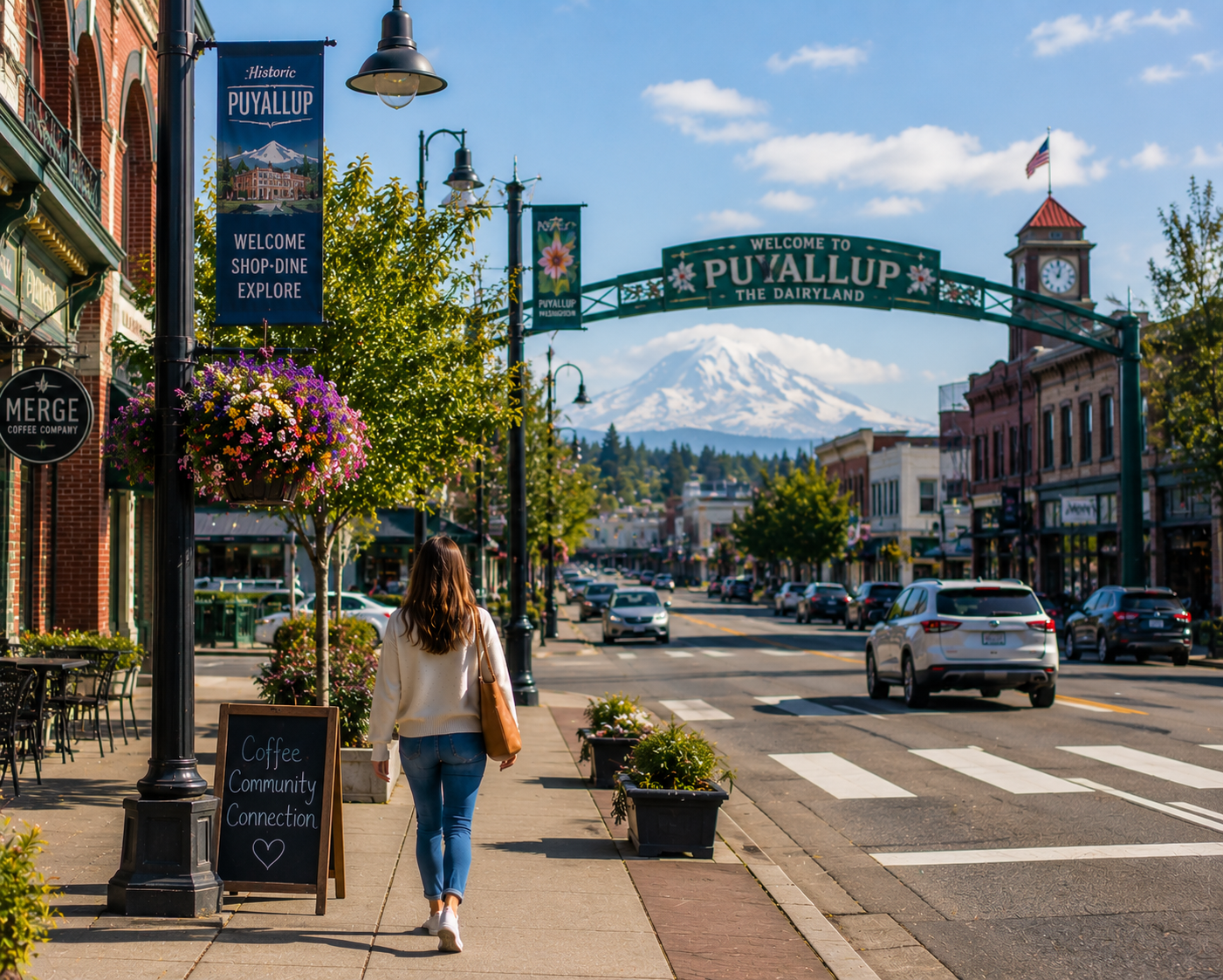
Puyallup is a mid-sized city with a walkable heart and a more car-dependent periphery. Like many South Sound communities, the city grew outward over the decades in patterns that favor the automobile, but its historic downtown has preserved a genuine pedestrian core that gives the city real walkable character. For buyers who prioritize proximity to that core, Puyallup offers a surprisingly enjoyable on-foot experience rooted in community, local business, and Pacific Northwest charm.
Where Puyallup Shines for Walkability
Historic Downtown Puyallup: Downtown Puyallup is the city's walkability anchor. Meridian Avenue and the surrounding blocks offer locally owned restaurants, coffee shops, boutiques, and community gathering spaces in a compact and strollable setting. The downtown has maintained its authentic small-city character while continuing to attract new businesses and investment, and it remains the most genuinely walkable part of the city.
Pioneer Park: Located in the heart of the city, Pioneer Park is a beloved community green space that is easily walkable from downtown and surrounding neighborhoods. With mature trees, picnic areas, and a historic carousel, Pioneer Park gives nearby residents a destination worth walking to and a green anchor for the surrounding neighborhood.
The Foothills Trail: The Foothills Trail is one of the great trail assets of Pierce County, following a former railroad corridor through Puyallup and extending into the broader region. For residents near the trail, it provides exceptional active walkability and a car-free connection to parks, open spaces, and neighboring communities that standard Walk Scores rarely capture.
Proximity to the Sounder Commuter Rail: Puyallup's Sounder commuter rail station connects the city to Tacoma and Seattle, giving residents near the station a meaningful transit option that reduces car dependence for commuting even if the surrounding neighborhood is not traditionally walkable.
Where Walkability Has Its Limits
Suburban Sprawl Beyond Downtown: Much of Puyallup's residential and commercial landscape beyond the historic core is organized around the car. Strip mall corridors, wide arterials, and suburban subdivisions dominate much of the city's geography, and daily errands in these areas almost always require driving.
South Hill and Outer Areas: The broader South Hill area adjacent to Puyallup is almost entirely car-dependent, with development patterns that prioritize vehicle access over pedestrian comfort. Buyers drawn to these areas for their newer construction and school options should plan accordingly.
Pedestrian Infrastructure Gaps: Outside of downtown and established neighborhoods near the core, sidewalk coverage in Puyallup can be inconsistent. Some residential streets lack continuous pedestrian infrastructure, which can make walking feel less safe or comfortable in certain areas.
What Puyallup's Walk Score Looks Like
Puyallup's overall Walk Score reflects its mixed character. Downtown Puyallup and neighborhoods near the historic core score meaningfully higher than the city average, while suburban areas tend to fall into the car-dependent range. The Foothills Trail adds trail-based walkability that standard metrics do not fully reflect. Always check the Walk Score for a specific address and visit the neighborhood in person before making a decision.
Tips for Finding a Walkable Home in Puyallup
- Prioritize neighborhoods near historic downtown Puyallup for the strongest pedestrian experience and community character.
- Look for homes with access to the Foothills Trail if active, trail-based walkability is important to you.
- Consider proximity to the Sounder commuter rail station if reducing car dependence for your daily commute is a priority.
- Walk the neighborhoods you are considering and evaluate sidewalk continuity and proximity to downtown amenities.
- Ask your real estate agent about which areas offer the best combination of walkability, trail access, and community character.
Finding Your Walkable Spot in Puyallup
Puyallup's historic downtown, beloved parks, and Foothills Trail create a walkable lifestyle that is rooted in authentic South Sound character. For the right buyer, living within reach of a charming downtown, a great trail, and a commuter rail connection is a genuinely compelling combination. Start your home search today on Everything Puyallup. Planning your move to Puyallup? Connect with Dennis and Melinda King for expert local guidance and help finding the neighborhood that fits the way you want to live.
References:
Walk Score. (n.d.). Puyallup, WA Walk Score. https://www.walkscore.com/WA/Puyallup
City of Puyallup, WA. (n.d.). Parks and Recreation. https://www.puyallupwa.gov/
Pierce County, WA. (n.d.). Foothills Trail. https://www.piercecountywa.gov/
Sound Transit. (n.d.). Sounder Commuter Rail. https://www.soundtransit.org/
U.S. Census Bureau. (n.d.). Puyallup, WA Community Facts. https://www.census.gov/